
Ihram — the sacred state
What you do
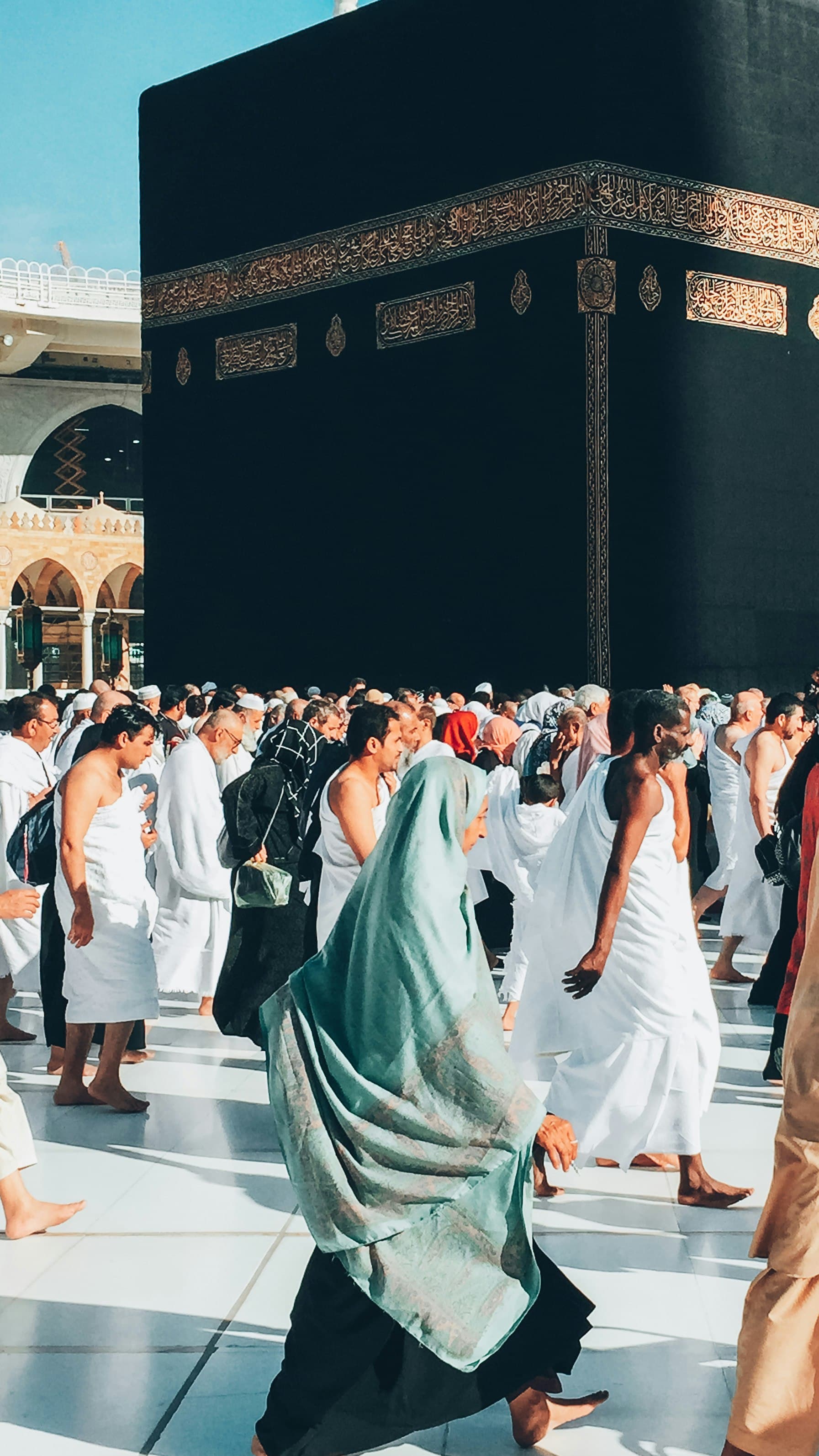
At or before the Miqat (the boundary stations), the pilgrim performs ghusl or wudu. Men wear two unstitched white cloths (the izar and the rida); women wear ordinary modest dress. You then make the intention (niyyah) for Umrah and recite the Talbiyah.
From this moment the restrictions of Ihram begin: no cutting hair or nails, no perfume, no sewn garments for men, no covering the head for men, no marital relations, and no hunting.
Why we do it
Status and adornment are stripped away. Rich and poor, ruler and labourer stand equal before Allah in two simple white cloths. The Talbiyah is the pilgrim's answer to Allah's call.
Du'a
لَبَّيْكَ اللَّهُمَّ لَبَّيْكَ، لَبَّيْكَ لَا شَرِيكَ لَكَ لَبَّيْكَ، إِنَّ الْحَمْدَ وَالنِّعْمَةَ لَكَ وَالْمُلْكَ، لَا شَرِيكَ لَكَ
Labbayka-llāhumma labbayk, labbayka lā sharīka laka labbayk, inna l-ḥamda wa n-niʿmata laka wa l-mulk, lā sharīka lak.
“Here I am, O Allah, here I am. Here I am, You have no partner, here I am. Truly all praise, favour and sovereignty are Yours. You have no partner.”
Reference: The Talbiyah; restrictions per the Sunnah


